
Agentic AI in marketing: real uses, limits and where to start
Agentic AI is one of the most searched AI terms. This plain guide explains what AI agents can do for marketing teams today, where they fail, and how to test them safely.
Published 6 October 2026 · By Naveed Murtaza
Source: Semrush monthly search-volume estimates, US and Canada databases, checked 6 October 2026. Estimates, not measured searches.
Set a narrow goal
For example: “Summarise last week’s ad results and flag anything unusual.”
Give limited access
Read-only access to reports, not the power to change budgets.
Agent plans and works
It gathers data, compares periods and drafts a summary.
Human reviews
A marketer checks the numbers and decides what to do.
Improve and widen
Only after reliable results do you give it the next task.
What makes AI “agentic”?
A normal chatbot answers one prompt at a time. An agent is given a goal and tools, then decides the steps itself: search the web, read a file, run a calculation, write a draft, check its work.
Semrush estimates about 90,500 monthly US searches for “agentic ai”, but its ranking difficulty is high. That means the opportunity is in specific, practical angles, such as marketing use, rather than broad definitions.
Where do agents help marketers today?
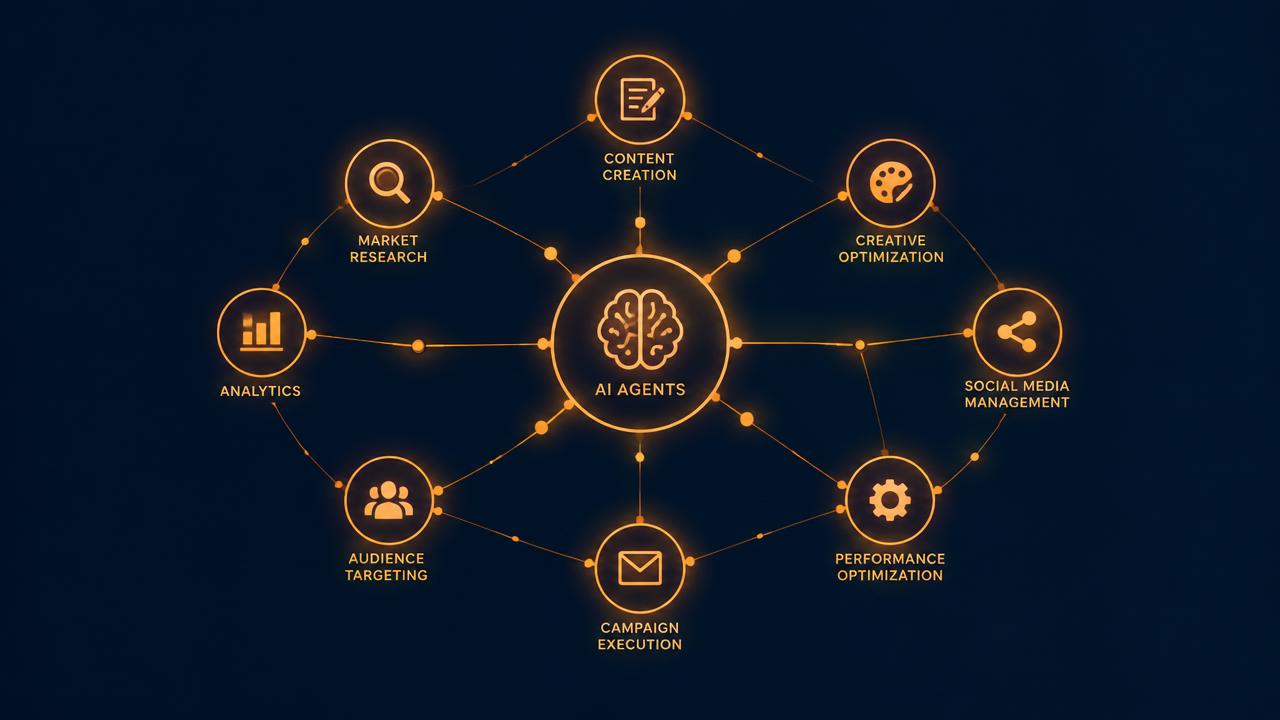
Weekly reporting across ad platforms, competitor and keyword research, first drafts of briefs and emails, tidying CRM records, and checking landing pages for broken links or missing tracking.
These tasks are repetitive, have clear right answers and can be checked by a person quickly.
Where do agents still fail?
Agents can misread data, invent sources or take an action that seemed logical but was wrong. They also struggle with brand judgement and with tasks where the goal is vague.
Never let an agent change ad budgets, publish public content or message customers without a human approval step.
What about ad platforms that already use automation?
Google, Meta and other platforms already automate bidding, targeting and creative mixing. Agentic tools sit on top of that and handle the work around the platforms, such as analysis and preparation.
Your edge is still the inputs: clean conversion data, strong offers and good creative.
How should a small team start?
Pick one painful, repeatable task. Write down what a good result looks like. Test an agent for two to four weeks against the current manual process and measure time saved and errors.
Keep data privacy in mind. Do not upload customer personal data to a tool unless you understand where it is stored and have the right to share it.
How fast will this topic grow?
Nobody can reliably promise that a topic will reach millions of searches in a set number of weeks. Search demand moves with news, product launches and policy announcements. The figures in this article are Semrush estimates for the US and Canada, so treat them as a guide to relative interest, not exact numbers.
A sensible approach is to publish a clear, sourced answer early, update it whenever the official source changes, and check real Search Console data before writing more on the same theme.